
HOW UNDERGROUND DARK WEB MARKET OPERATE |A DEEP DIVE

You've probably heard about the notorious Silk Road or seen news reports about massive FBI takedowns. But what exactly happens behind the scenes of these digital black markets? How do they really work, and why do they keep popping up despite constant law enforcement pressure?
Let's pull back the curtain on this shadowy world that operates right under our noses.
What Exactly Are Dark Web Markets?
Think of dark web markets as the underground eBays of illegal goods. These hidden websites operate on the Tor network, which scrambles your internet traffic through multiple layers of encryption, making it nearly impossible for anyone to trace where you're browsing from
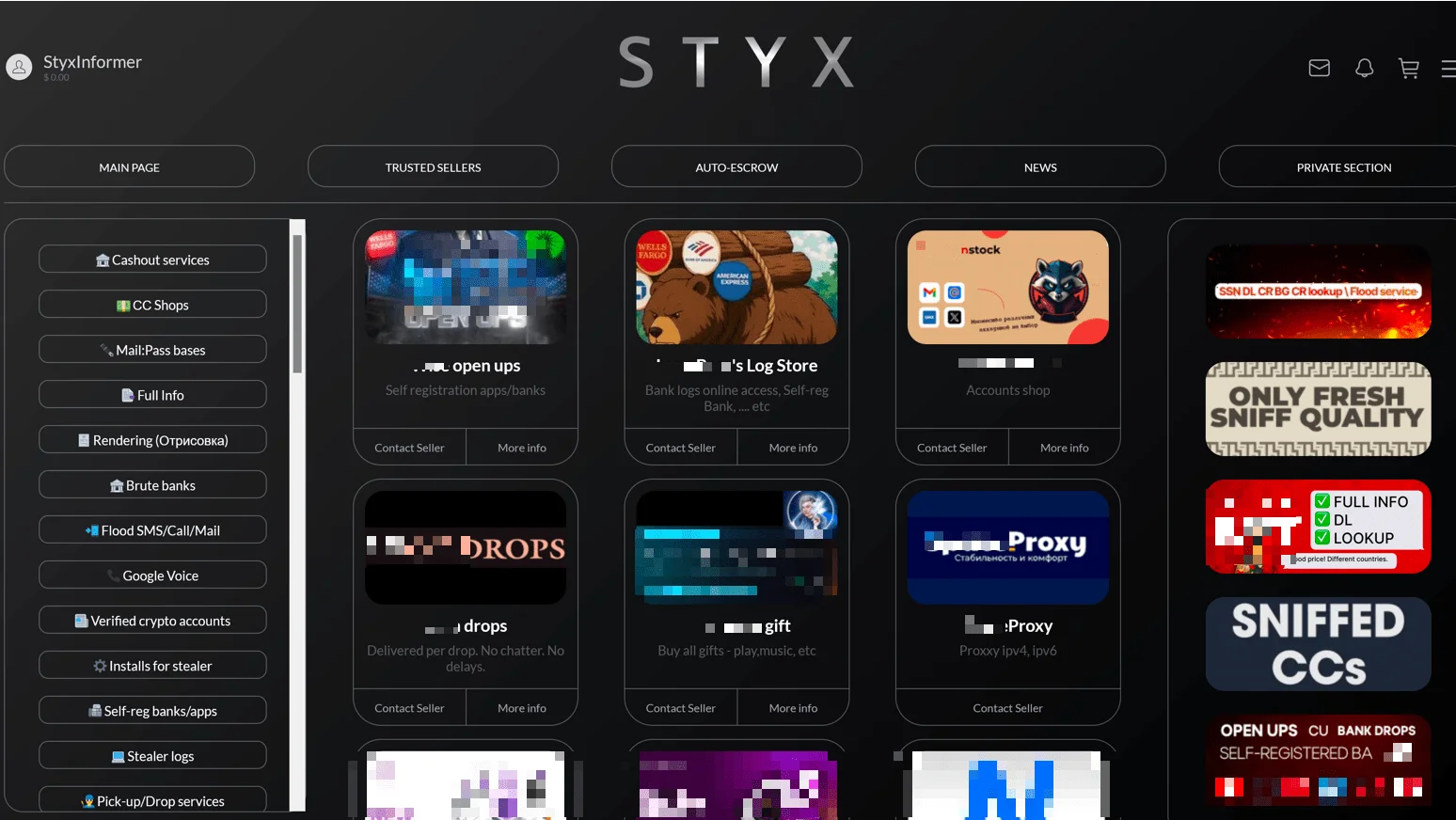
Unlike regular websites you'd find on Google, these markets are only accessible through special browsers and use cryptic .onion addresses that look like gibberish. They're essentially anonymous marketplaces selling drugs, weapons, stolen data, fake documents, malware, and even hitman services
The scale is staggering. Recent data shows that dark web markets generated over $1.7 billion in cryptocurrency revenue in 2023, with some individual platforms handling hundreds of millions of dollars annually
The Notorious Hall of Fame (and Infamy)
Before we dive into how these markets work, let's meet some of the biggest players that have shaped this underground economy:
1.Silk Road (2011-2013) was the grandfather of them all, pioneering the model that every other market would copy. At its peak, it facilitated sales worth over 9.5 million bitcoins - worth about $1.2 billion at the time of shutdown
2.AlphaBay (2014-2017) became the largest marketplace in history, with 40,000 vendors and 250,000 drug listings. It was roughly 10 times the size of Silk Road when the FBI shut it down.

Step Inside: How These Digital Bazaars Actually Work
Getting In: The Secret Handshake
First, you need the right tools. Download the Tor browser, get a .onion link (usually shared on forums like Dread - basically the Reddit of the dark web), and you're in. Many markets are invite-only or require references from trusted community members.
Setting Up Shop: Vendors and Buyers
For Vendors: You need to apply to sell, pay a vendor bond (usually $150-$1,000), and prove you're legit. Markets verify sellers through reputation systems, requiring PGP encryption keys for secure communication. Think of it as a criminal background check, but in reverse
For Buyers: Create an account, set up PGP encryption (essential for protecting your address and personal info), and you're ready to shop the digital underground.
The Shopping Experience: Disturbingly Normal
Browse categories like you would on Amazon - except instead of electronics and books, you'll find sections for "Drugs & Chemicals," "Fraud & Forgery," "Hacking & Security," and "Weapons". Each listing includes detailed descriptions, photos, shipping info, vendor ratings, and customer reviews.
Vendors compete on quality, price, shipping speed, and stealth packaging. Customer reviews are brutally honest: "Product arrived in 3 days, exactly as described, excellent stealth, will buy again" or "Complete scam, never received anything, avoid this vendor"
.
The Money Game: Cryptocurrency and Escrow
Here's where it gets interesting. All transactions happen in cryptocurrency - mainly Bitcoin or Monero.Monero is increasingly popular because it's much harder to trace than Bitcoin
But the real magic happens with the escrow system
> When you buy something:
- You send payment to the market's escrow wallet (not directly to the vendor)
- Vendor ships your item
- You confirm receipt and quality
- Market releases funds to vendor
This system protects both sides from getting ripped off. If there's a problem, market administrators step in to mediate disputes It's like having a criminal customer service department.
The Trust Economy: Reviews and Reputation
In a world where everyone is anonymous, reputation is everythingVendors build trust through thousands of successful transactions and positive reviews. A single bad review can destroy years of work
Markets use sophisticated feedback systems similar to eBay's, with detailed ratings for product quality, shipping speed, communication, and stealthSome vendors even offer "finalize early" (FE) deals for trusted customers, bypassing escrow for faster service
The Art of Staying Hidden
Operational Security (OpSec): Staying One Step Ahead
Success in this world requires paranoid levels of security. Vendors and buyers use multiple layers of protection:
- PGP encryption for all communication
- Cryptocurrency tumbling/mixing to break transaction trails
- Separate devices and identities for dark web activities
- Dead drops and reshipping services for physical deliveries
The smartest operators never reuse usernames, passwords, or patterns that could link their activities
The Human Element: Where Things Go Wrong
Despite all this technology, human error remains the biggest threat The most spectacular takedowns often result from simple mistakes:Ross Ulbricht (Silk Road) was caught partly because he used his real email address in early Bitcoin forum posts Alexandre Cazes (AlphaBay) included his personal Hotmail address in the market's system emails and was logged into the admin panel when Thai police arrested him
When Markets Vanish: Exit Scams and Takedowns
The Ultimate Betrayal: Exit Scams
Not all markets end with dramatic FBI raids. Many simply vanish overnight with millions in escrow fundsThis is called an "exit scam," and it's devastatingly common.Abacus Market's recent disappearance is a perfect example
Users started reporting withdrawal problems in late June 2024. The administrator blamed a DDoS attack and new user influx, but daily deposits plummeted from $230,000 to just $13,000. Then - poof - the entire site disappeared, likely taking $300-400 million in total sales with itLaw Enforcement Strikes Back
When authorities do strike, the results are spectacular. Operation Bayonet (2017) was a masterclass in international cooperation
- . The Dutch police secretly took control of Hansa Market for weeks, collecting user data while the FBI simultaneously took down AlphaBay. Users fleeing AlphaBay walked straight into the law enforcement honeypot.
- Operation SpecTor (2023) was even bigger, resulting in 288 arrests across three continents, seizing 850 kg of drugs, 117 firearms, and $53.4 million It showed that despite the anonymity, law enforcement is getting better at connecting the dots.
The Cat and Mouse Game: How the Cops Track the Untraceable
Breaking the "Unbreakable" Anonymity
Despite all the encryption and anonymity tools, law enforcement has developed sophisticated techniques to track dark web criminal
Blockchain Analysis: Bitcoin transactions are actually quite traceable. Every transaction is permanently recorded on a public ledger. Advanced software can track coins through mixing services and connect transactions to real-world identities
Traffic Correlation: By monitoring internet traffic patterns, authorities can sometimes match activity entering the Tor network with activity leaving it
Server Seizures: When markets get taken down, servers contain treasure troves of data - vendor communications, buyer lists, transaction records, and sometimes unencrypted databases
Undercover Operations: Federal agents regularly pose as buyers and vendors, building cases from the inside They've bought everything from drugs to weapons to build prosecutions.
Human Intelligence: Flipping arrested vendors and administrators provides inside information about market operations and other criminals.
The Silk Road Case Study: Digital Detective Work
The Silk Road takedown remains the gold standard for digital investigations Authorities used blockchain analysis to trace Bitcoin transactions, eventually identifying patterns that led to Ross Ulbricht.
But the breakthrough came from good old-fashioned police work combined with digital forensics. When they arrested Ulbricht in a San Francisco library, he was logged into the Silk Road admin panel on his laptop. Game over.
Even years later, the investigation continues to pay dividends. In 2022, authorities seized over $3.3 billion in Bitcoin from James Zhong, who had stolen the funds from Silk Road a decade earlierThe coins were hidden on a circuit board at the bottom of a popcorn tin
The Current Landscape: What's Happening Now
Today's Market Leaders
The dark web ecosystem remains surprisingly resilient despite constant law enforcement pressure. Current major players include
- Russian markets like Mega and Kraken, specializing in drugs for Russian-speaking users
The Numbers Tell the Story
Recent statistics paint a picture of a thriving underground economy
- Over 2.5 million daily dark web visitors as of 2024
The Evolution Continues
Today's markets are more sophisticated than ever
They feature:
- Advanced security measures like two-factor authentication and anti-phishing systems
- Professional customer service and dispute resolution systems
The Endless Cycle
Here's the fascinating thing: no matter how many markets get shut down, new ones always emerge
When AlphaBay fell, users migrated to Hansa (which was already compromised). When Hansa was revealed as a law enforcement operation, they moved to Dream Market, then Wall Street Market, then Empire Market - and on and on.
It's like a criminal game of whack-a-mole Each new generation learns from the mistakes of its predecessors, implementing better security and more sophisticated operations.
Why They Keep Coming Back
The economics are simply too attractive. Successful vendors can make millions with relatively low overhead
- Market administrators earn hefty fees (typically 2-5% of all transactions). And despite the risks, the potential profits keep drawing new players.
- From a buyer's perspective, these markets offer convenience, selection, and often higher quality than street dealers
- Customer reviews and vendor competition actually create better service than traditional drug markets.
The Bigger Picture: What This All Means
Dark web markets represent a fundamental challenge to traditional law enforcement. They've decentralized and democratized crime, allowing anyone with basic computer skills to access global criminal networks.
But they've also revealed something important: criminals want the same things as legitimate businesses - good customer service, reliable products, dispute resolution, and protection from getting ripped off.The success of these markets shows that even in the criminal underworld, trust and reputation matter more than anything else.
The Future of Underground Commerce
As we've seen with the recent Abacus Market exit scam and the takedown of Archetyp Market the landscape continues to evolve rapidly. Law enforcement is getting better at infiltrating and shutting down these operations, but the criminal ecosystem adapts just as quickly.
New technologies like improved cryptocurrency privacy features, decentralized marketplaces, and advanced encryption will likely shape the next generation of dark web markets. Meanwhile, international cooperation between law enforcement agencies continues to improve, leading to more successful operations like SpecTor.
The cat-and-mouse game between criminals and cops shows no signs of ending. For every technique law enforcement develops to track criminals, the criminal community develops countermeasures. It's an endless cycle of innovation on both sides.
One thing is certain: as long as there's demand for illegal goods and services, and as long as technology provides tools for anonymity, dark web markets will continue to exist in some form. They've become a permanent fixture of our digital landscape - a shadow economy that operates parallel to the legitimate internet we use every day.
Understanding how these markets work isn't about encouraging illegal activity - it's about recognizing the reality of how technology has transformed crime in the 21st century. Knowledge is power, whether you're law enforcement, a cybersecurity professional, or just a curious citizen trying to understand the hidden corners of our interconnected world.
The dark web markets may operate in shadows, but their impact on society, law enforcement, and technology is very much in the light.
Warning Conclusion: The Dark Web’s Dangerous Game
The world of dark web markets isn’t just a digital curiosity—it’s a dangerous, ever-evolving underworld that thrives on risk, secrecy, and greed. While these markets may offer a twisted sense of community and convenience, they also bring real dangers to anyone involved—dealers, buyers, and even the innocent bystanders swept up by cybercrime.
Here’s what you need to remember:
- Nothing is truly anonymous. Law enforcement agencies around the world have become highly skilled at tracking blockchain transactions, flipping insiders, and exploiting even the smallest security slip-ups.
- Legal consequences are severe. International operations regularly seize dark web servers and arrest both buyers and sellers—no one is truly safe
- The bottom line: If you’re ever tempted by the idea of exploring or using these markets, remember that the risks far outweigh the rewards. The supposed safety net of encryption and cryptocurrencies can unravel in an instant, and law enforcement is always just a step behind (or ahead). The cat-and-mouse game on the dark web is real, and you don’t want to end up as either the mouse or the cat’s next meal.
Where Did These Facts Come From?
All the details and numbers in this article are sourced from publicly available reports, news investigations, and law enforcement press releases:
- Major busts such as those of Silk Road, AlphaBay, Hansa, and Abacus Market were reported by news outlets, Europol, the FBI, and DOJ statements.
- Cryptocurrency statistics, dark web traffic, and the specifics of how these markets operate come from cybersecurity research groups and blockchain analytics firms, as featured in outlets like Wired, the BBC, and Chainalysis annual reports.
The information has been pulled together from those who’ve investigated, prosecuted, or studied the dark web first-hand. Stay informed, stay curious—and stay safe.
This ends our deep dive into the real workings of dark web markets—a hidden world that, while fascinating, carries very real dangers and consequences.
HELLO FELL FREE TO COMMENT AND IF YOU ARE INTRESTED IN WRITING ARTICLE FOR OUR WEBSITE CONTANT US USING sithum42d@proton.me
ReplyDelete